
Brand
Breitling
Est. 1884 · Saint-Imier, Switzerland
The chronograph specialist of choice for aviators since 1884.
Half cost less than £4,165, and a quarter less than £3,085.
Learn more about BreitlingShow less
Léon Breitling founded a workshop in Saint-Imier in 1884 specialising in chronographs and precision counters for industrial, scientific, and sporting use — deliberately narrow ground at a time when most makers built everything.
The family's technical contribution is the chronograph as we use it. Gaston Breitling introduced a wrist chronograph with a dedicated pusher separate from the crown in 1915, unpicking the start-stop-reset sequence from the winding mechanism. Willy Breitling added the second pusher in 1934, separating reset from stop and completing the two-pusher layout every chronograph has used since.
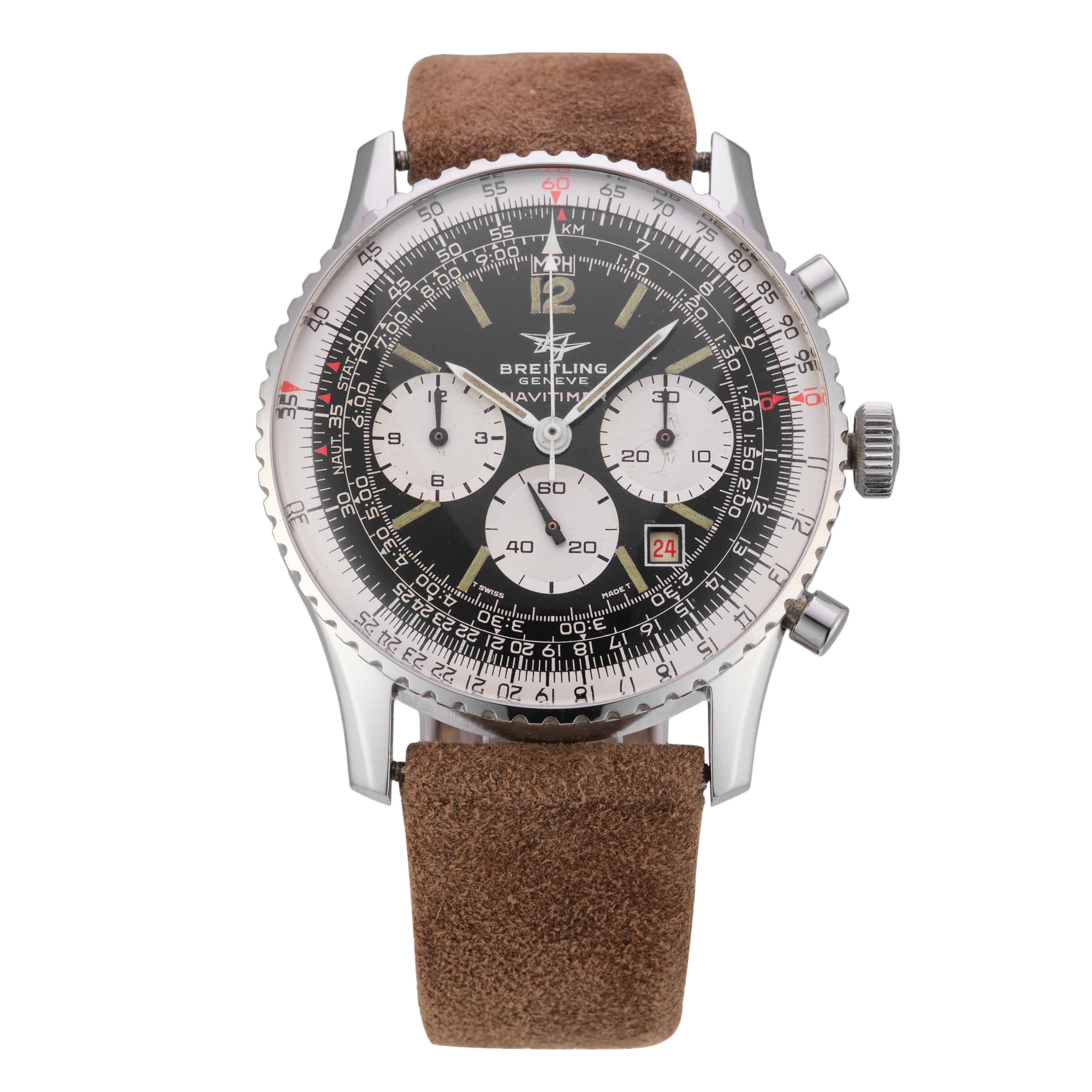
Aviation followed naturally. The Chronomat arrived in 1942 with a rotating slide rule bezel, and the Navitimer in 1952 refined the idea into a circular flight computer capable of fuel burn, climb rate, and unit conversion. It became the semi-official watch of pilots and remains the brand's signature.
Breitling was among the consortium — with Heuer, Hamilton, and Dubois Dépraz — racing Zenith and Seiko to the first automatic chronograph in 1969.
The company faltered badly in the quartz crisis and stopped trading in 1979. Ernest Schneider bought the name and rebuilt it around aviation and oversized cases. A change of ownership in 2017 brought Georges Kern and a deliberate softening toward slimmer, more archival designs.
Breitling holds 10 models, from £2,550 to £6,150. Half cost less than £4,165, and a quarter less than £3,085. 8 of 10 are automatic. 4 are stocked by more than one retailer, giving 15 offers in total. Prices are checked nightly against the retailers’ own feeds.
- 1884
- Léon Breitling opens his chronograph workshop.
- 1915
- The first chronograph pusher independent of the crown.
- 1934
- The two-pusher chronograph layout is completed.
- 1952
- The Navitimer introduces the aviation slide rule.
- 1979
- The original company closes; Ernest Schneider revives the name.
15 watches
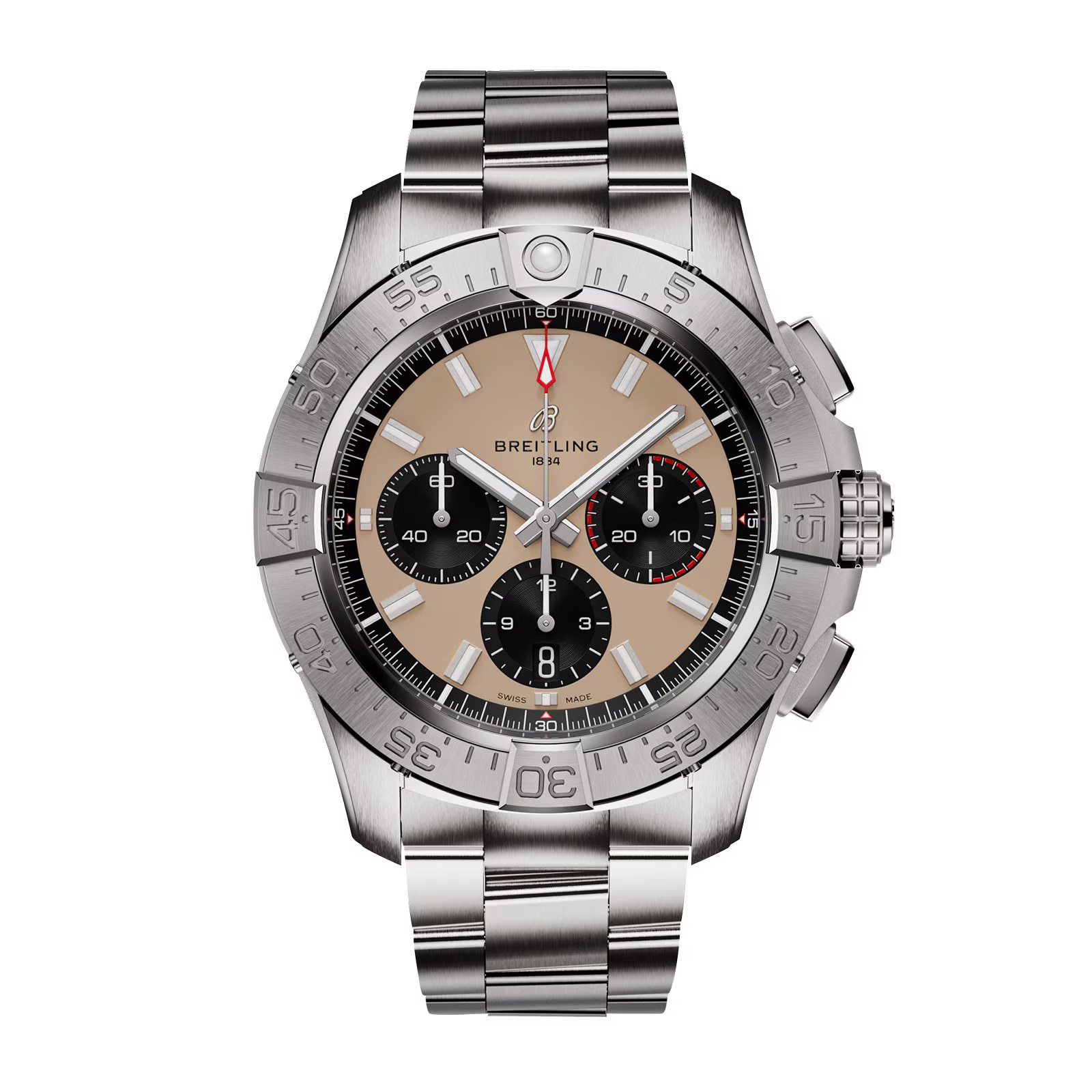
Breitling
Avenger Chronograph B01 44mm Mens Watch Beige Stainless Steel
£4,060
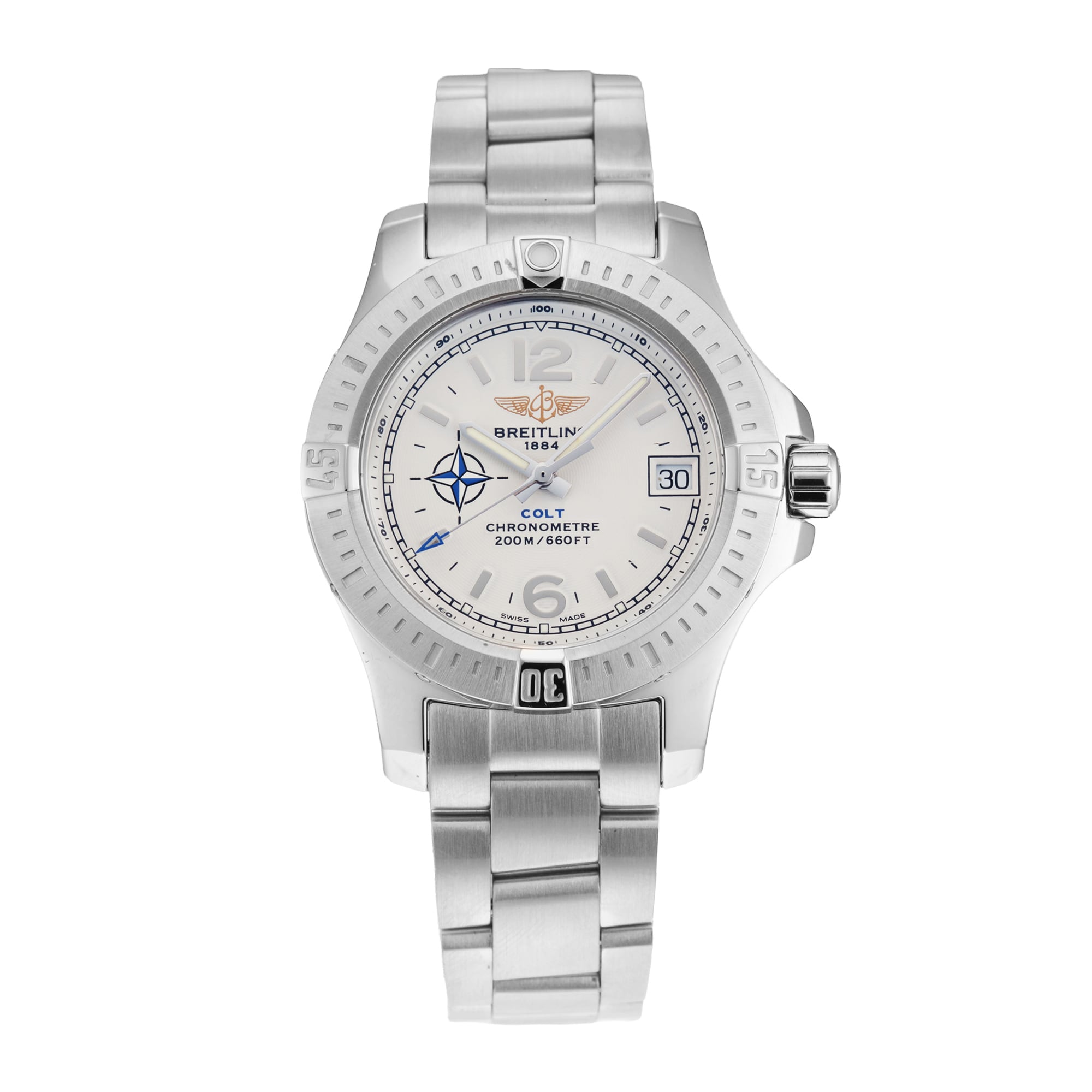
Breitling
Colt NATO Limited Edition 34mm Stainless Steel
£2,650
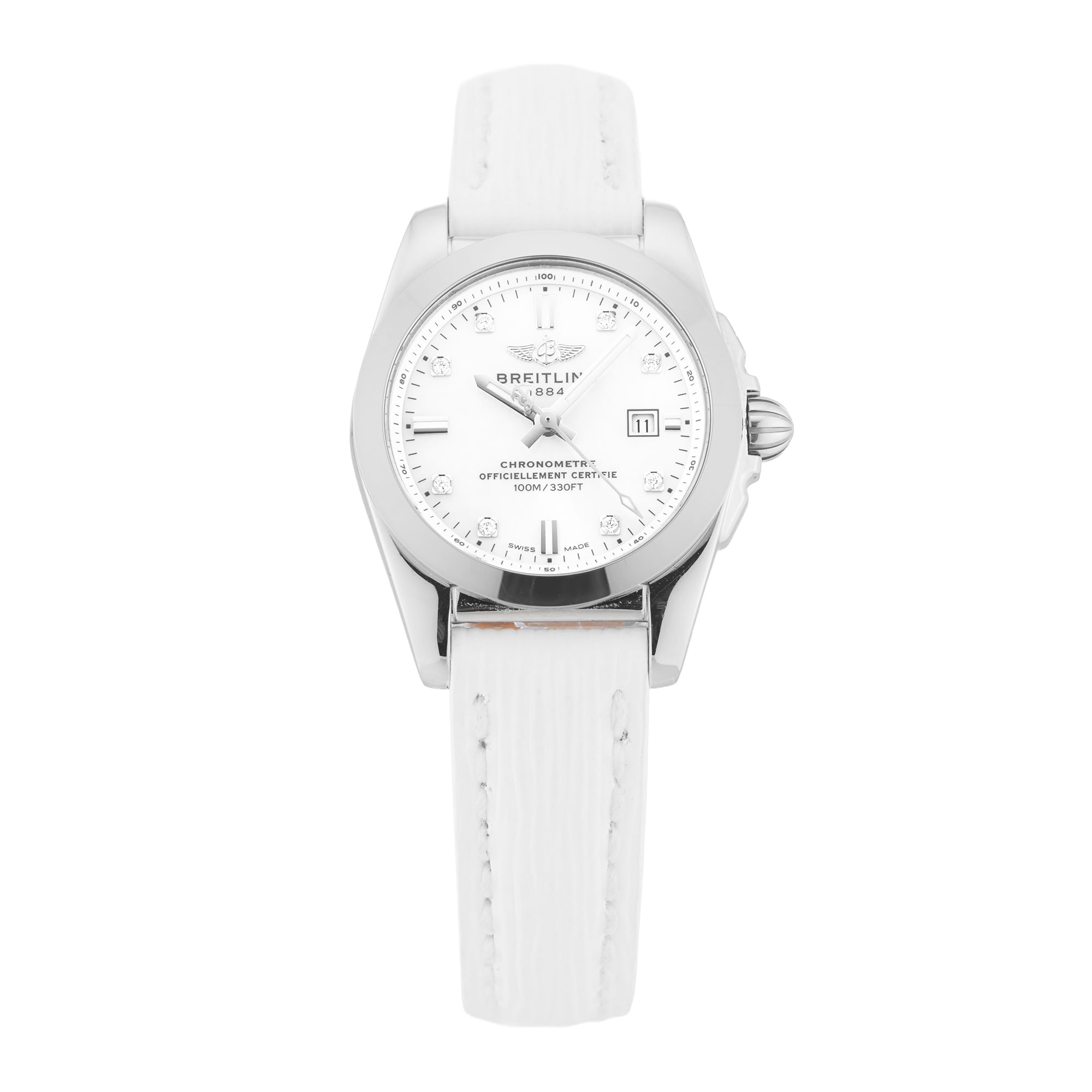
Breitling
Galactic 29mm Stainless Steel
£2,550
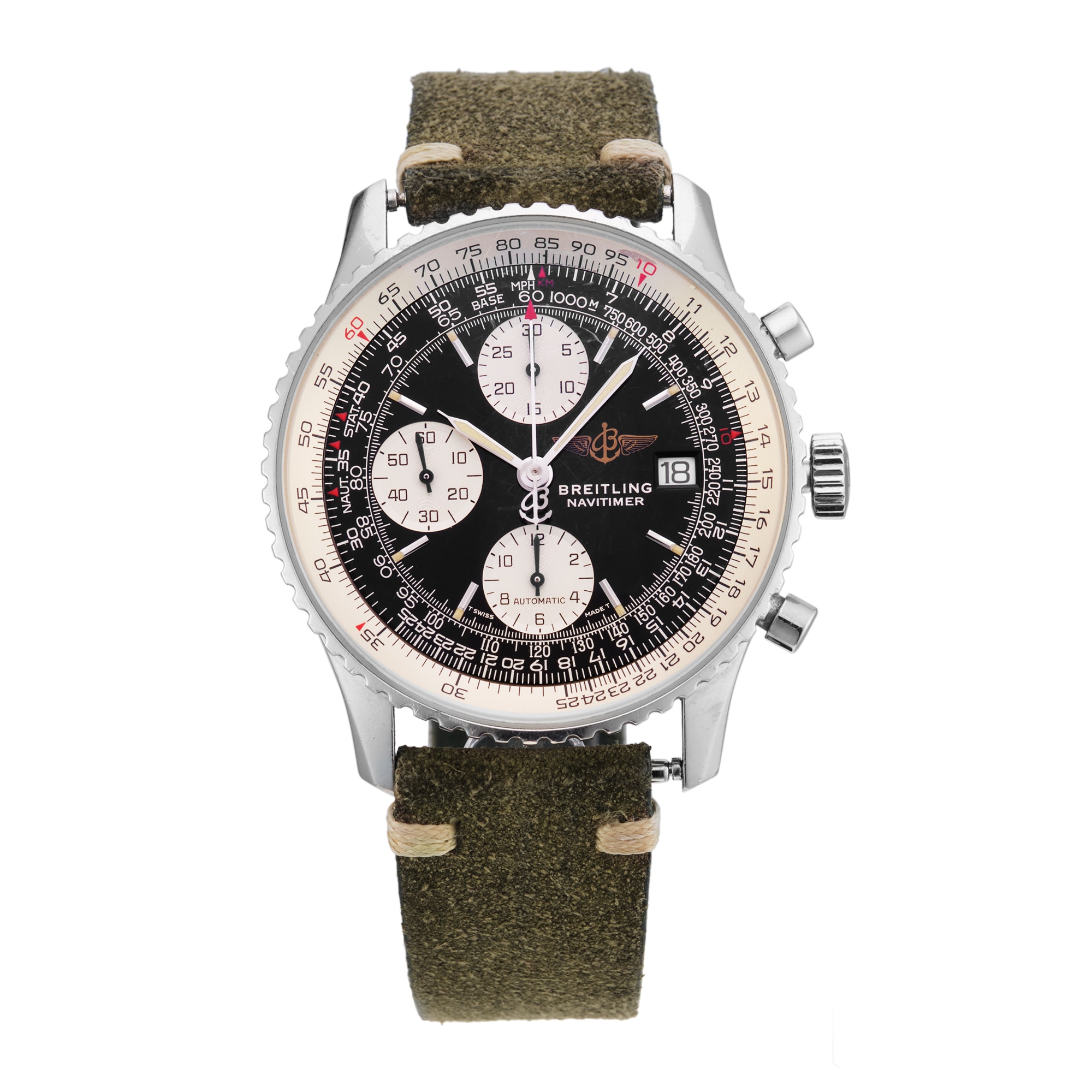
Breitling
Navtimer 41mm Stainless Steel
£5,850
Breitling
Navtimer Big Eye 41mm Stainless Steel
£6,150
Breitling
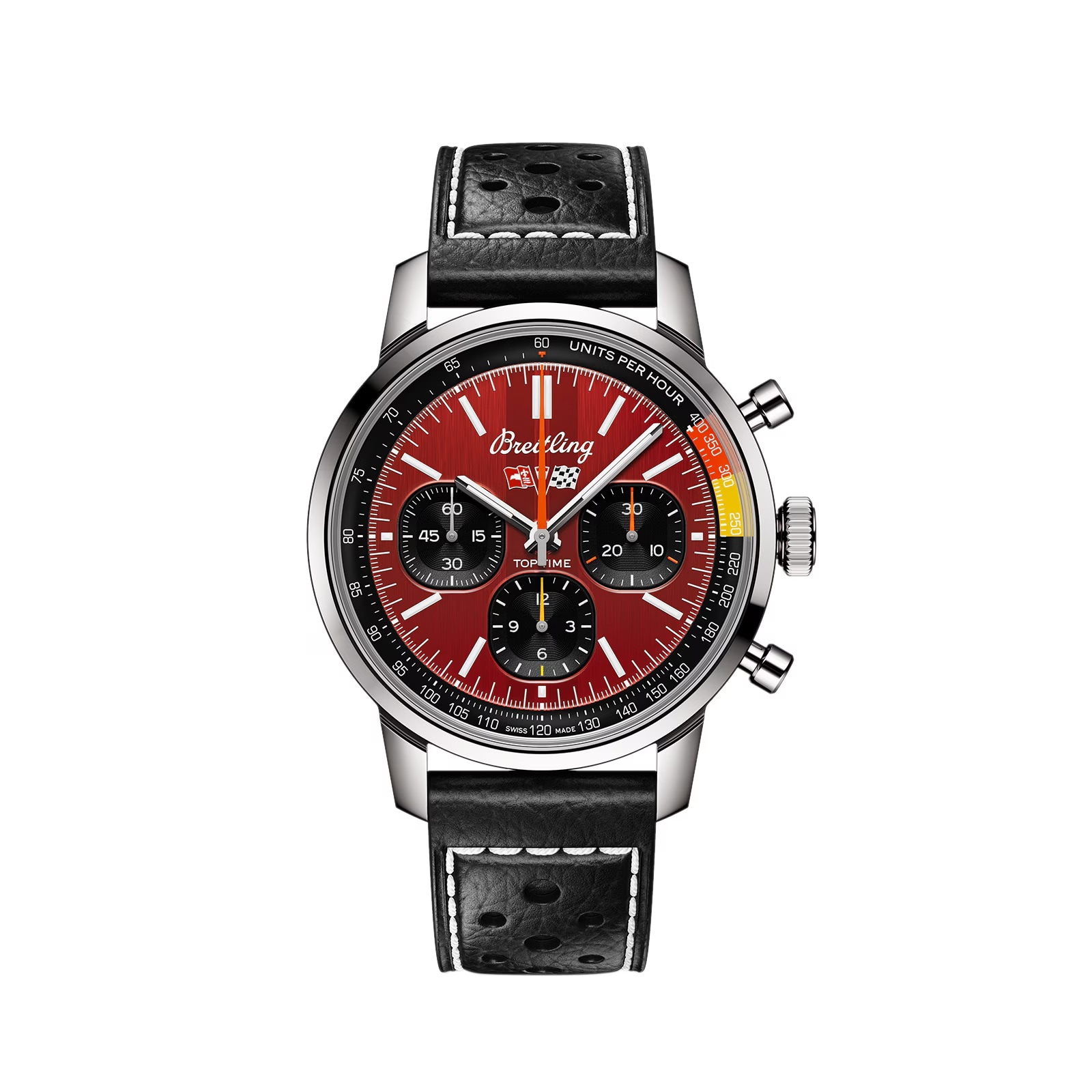
Top Time B01 Classic Cars Chevrolet Corvette 41mm Mens Watch
£5,950

Breitling
Top Time B01 Classic Cars Ford Mustang 41mm Mens Watch
£4,165
Breitling
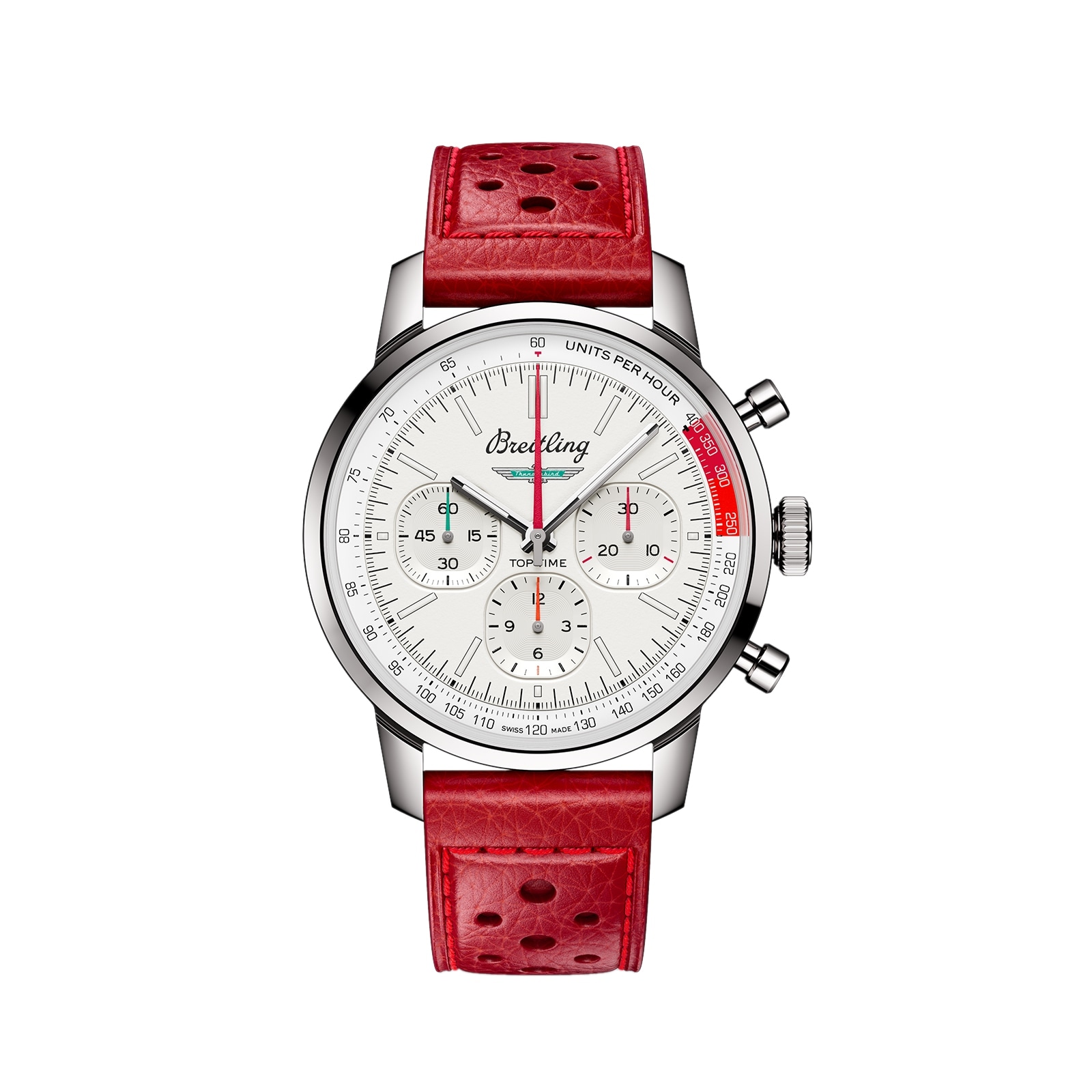
Top Time B01 Classic Cars Ford Thunderbird 41mm Mens Watch
£4,165
Breitling
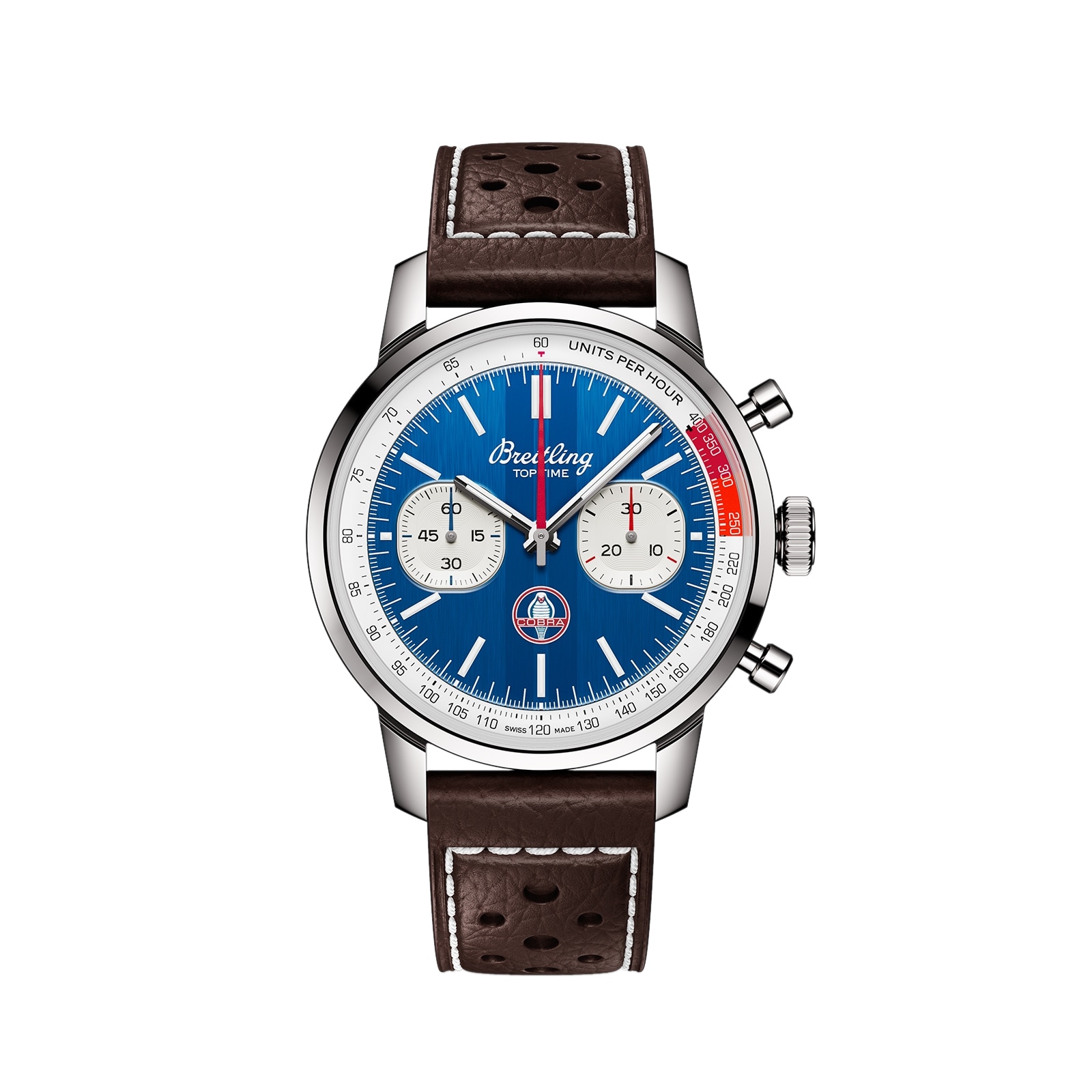
Top Time B01 Classic Cars Shelby Cobra 41mm Mens Watch
£4,165

Breitling
Top Time Chevrolet Corvette 42 Stainless Steel 42mm Automatic Mens Watch
£2,760
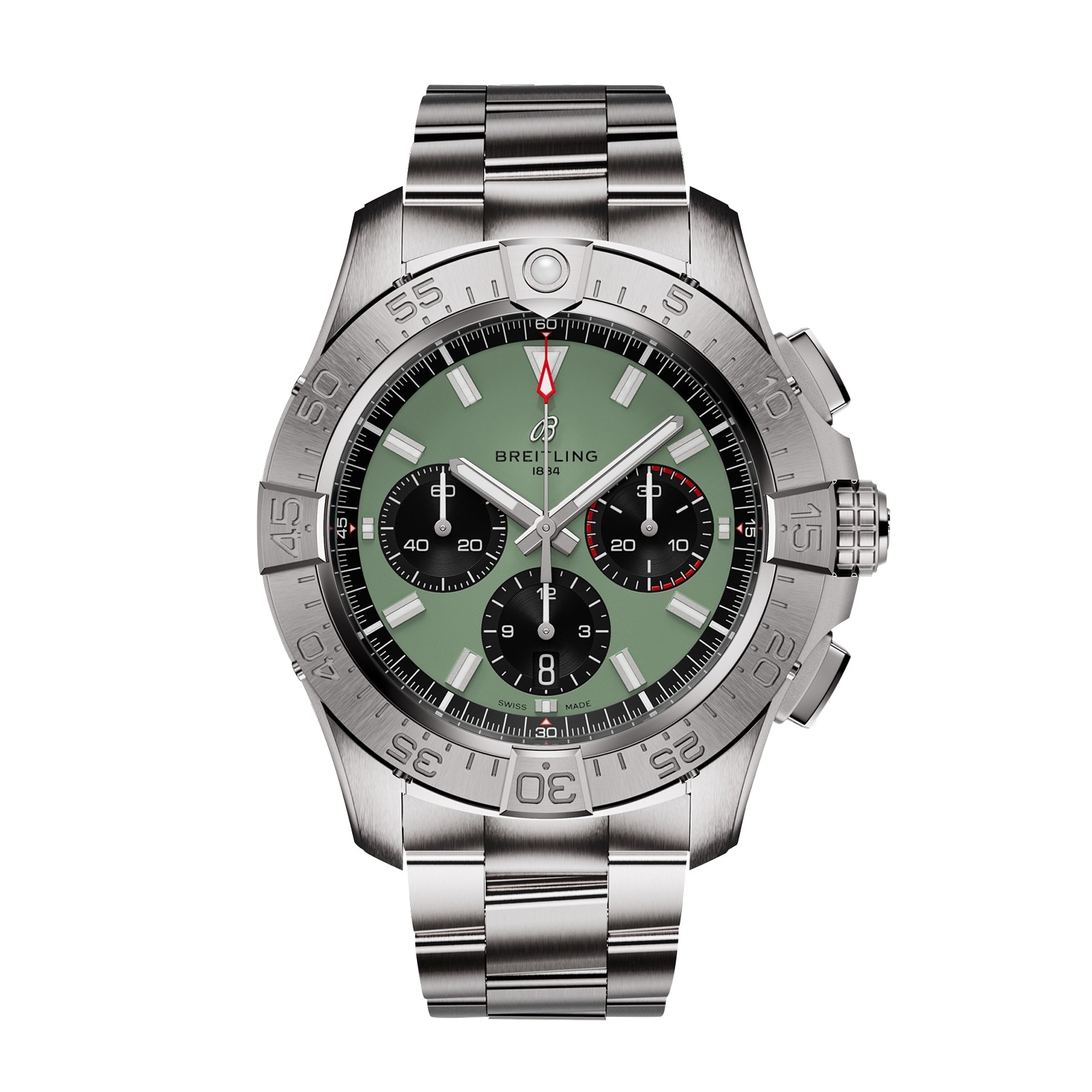
Breitling
Avenger Chronograph B01 44mm Mens Watch Green Stainless Steel
£4,060
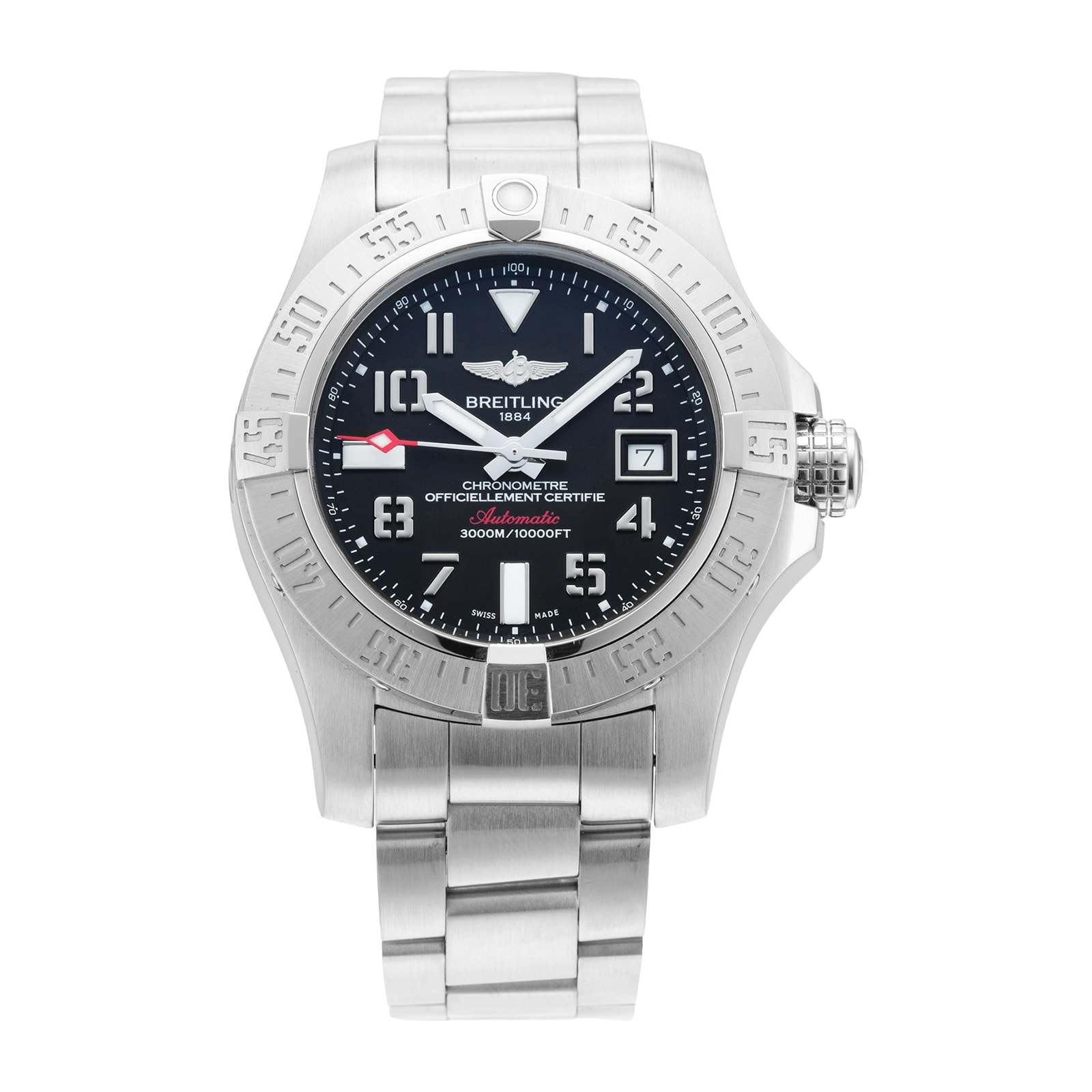
Breitling
Avenger II Seawolf 45mm Stainless Steel
£2,550
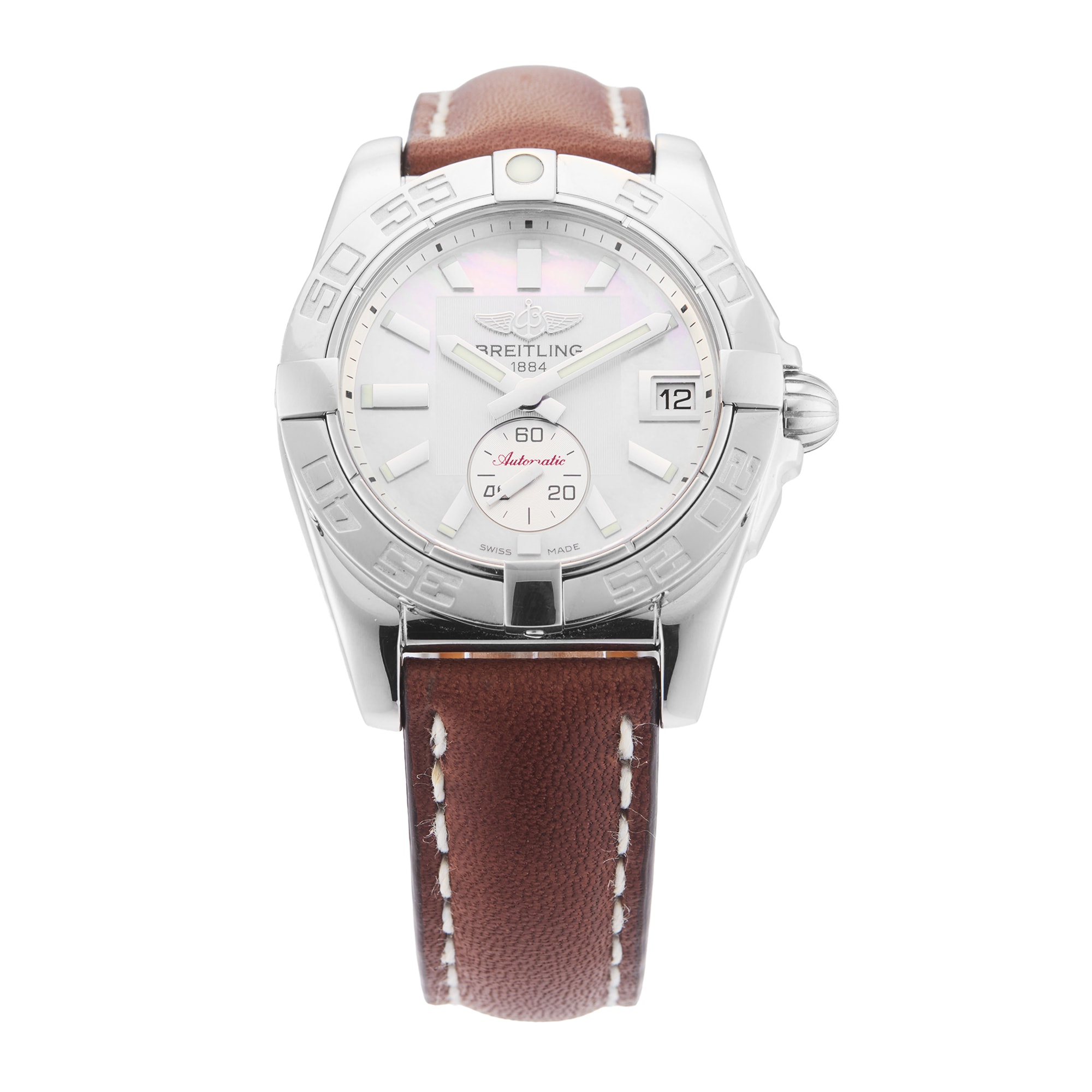
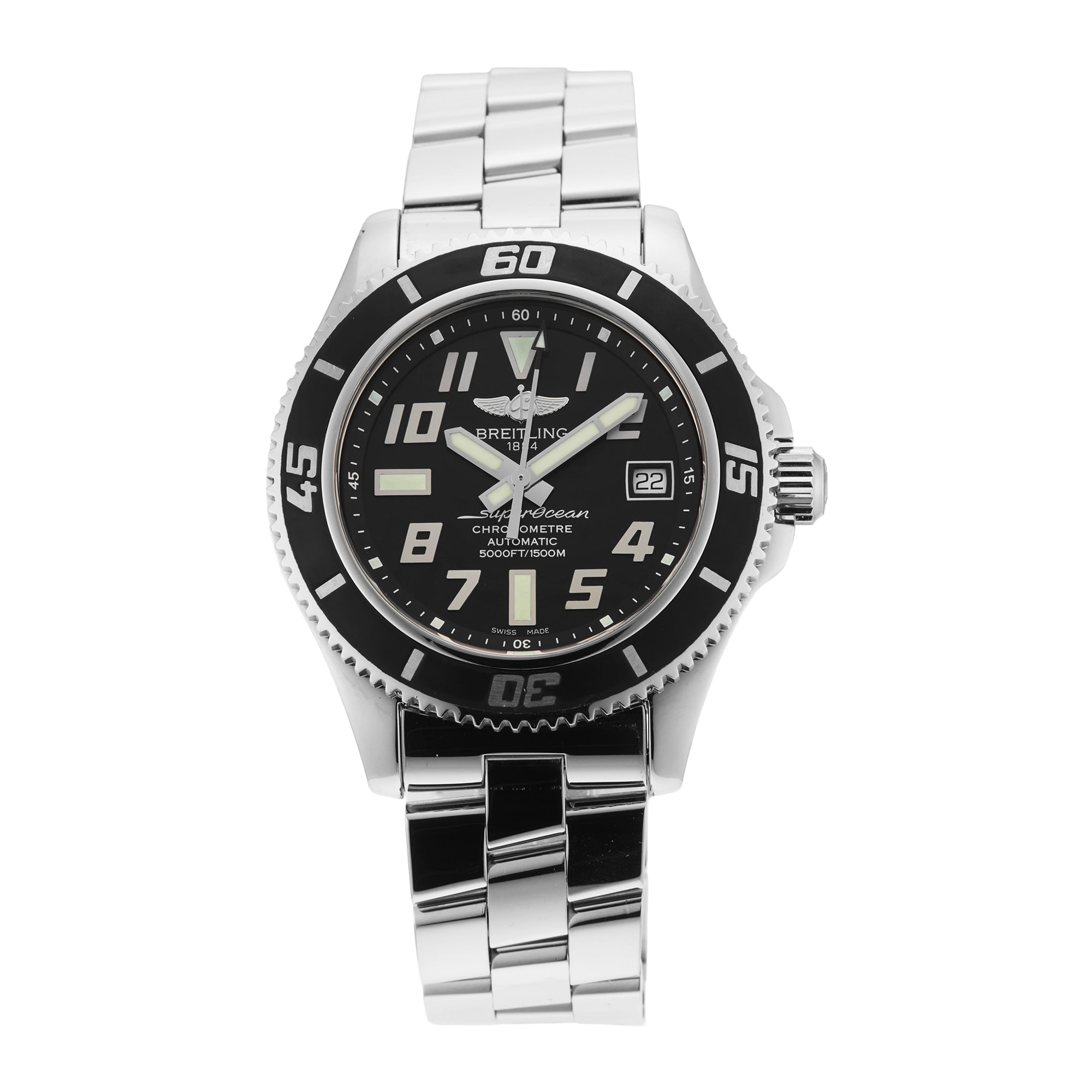
Breitling
Superocean 42mm Stainless Steel A17364
£2,350

Breitling
Top Time 1969s 36MM Stainless Steel
£9,495