
Brand
Eterna
Est. 1856 · Grenchen, Switzerland
Inventor of the ball-bearing rotor used across the Swiss industry.
Half cost less than £650, and a quarter less than £650.
Learn more about EternaShow less
Josef Girard and Urs Schild founded a watchmaking workshop in Grenchen in 1856, which became Eterna. Its contribution to horology is disproportionate to its current profile, and it comes in two parts.
The first is the alarm. Eterna produced the first wristwatch with an alarm complication in 1908, decades before the mechanism became common.
The second changed every automatic watch made since. In 1948 Eterna introduced the Eterna-Matic, which mounted the winding rotor on five miniature ball bearings rather than a simple pivot. Friction and wear dropped dramatically, winding efficiency improved, and the system proved so effective that ball-bearing rotors became the industry standard. The five bearings appear as the five dots in the Eterna logo.
Eterna also founded ETA. In 1932 the company separated its movement production into a distinct entity, which grew into the largest movement manufacturer in the world and now supplies a substantial share of the Swiss industry from within the Swatch Group. Eterna and ETA parted ways in 1984.
The house produced the Kontiki in 1958, named for Thor Heyerdahl's raft expedition, and continues to build dive and dress watches around that heritage. Ownership has changed several times in recent decades, most recently to Chinese investors.
Eterna holds 1 model, from £650 to £650. Half cost less than £650, and a quarter less than £650. Prices are checked nightly against the retailers’ own feeds.
- 1856
- Josef Girard and Urs Schild found the company in Grenchen.
- 1908
- Produces the first wristwatch with an alarm.
- 1932
- Movement production is separated, creating ETA.
- 1948
- The Eterna-Matic introduces the ball-bearing rotor.
- 1958
- The Kontiki launches, named for Heyerdahl's expedition.
1 watch
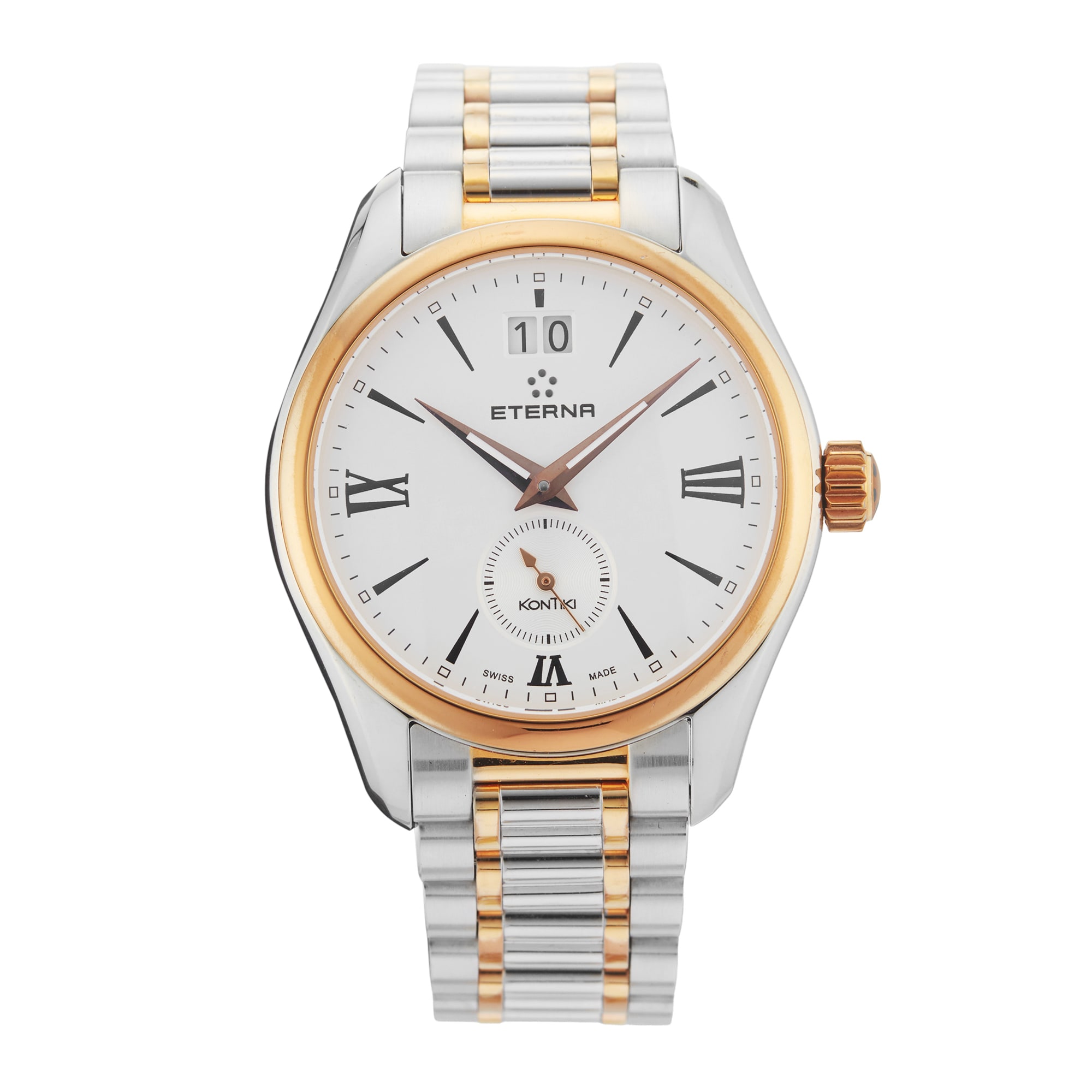
Eterna
KonTiki 36mm Stainless Steel
£650