Tap the image to enlarge

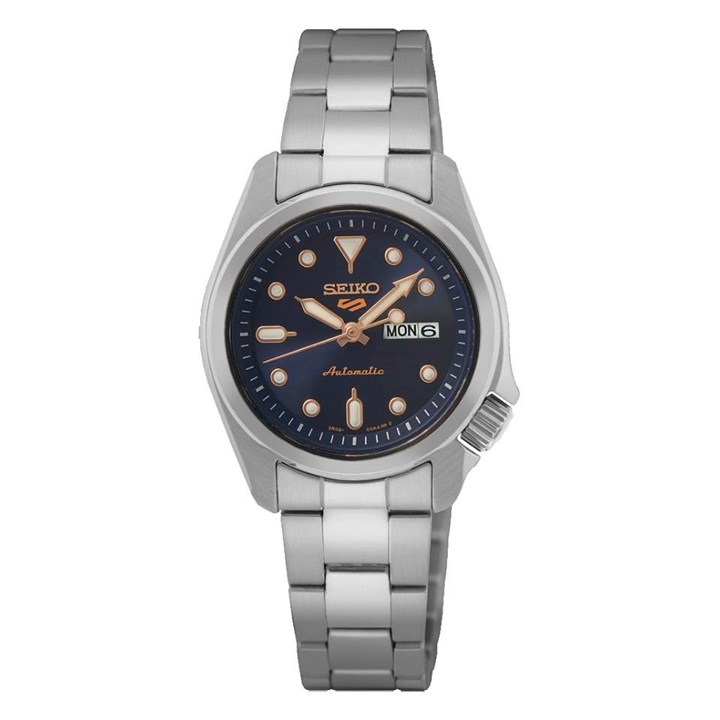
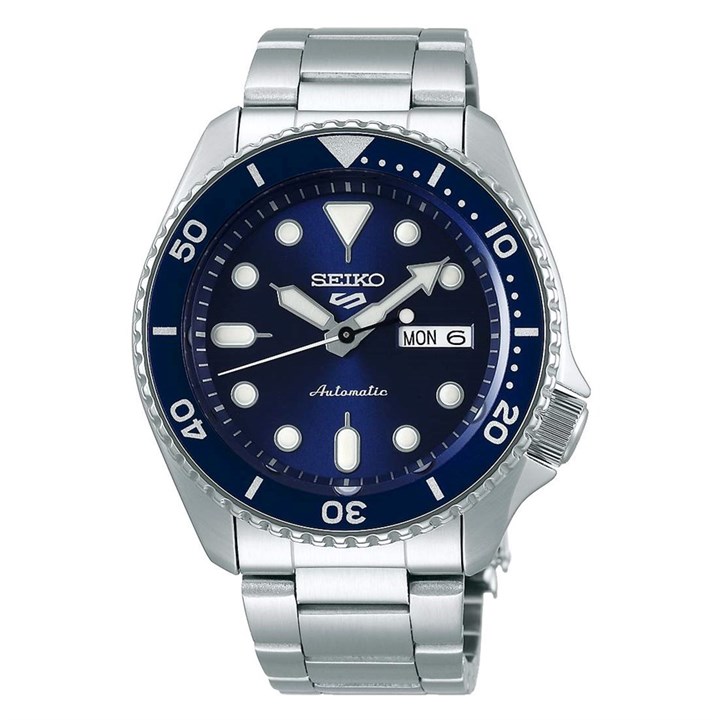
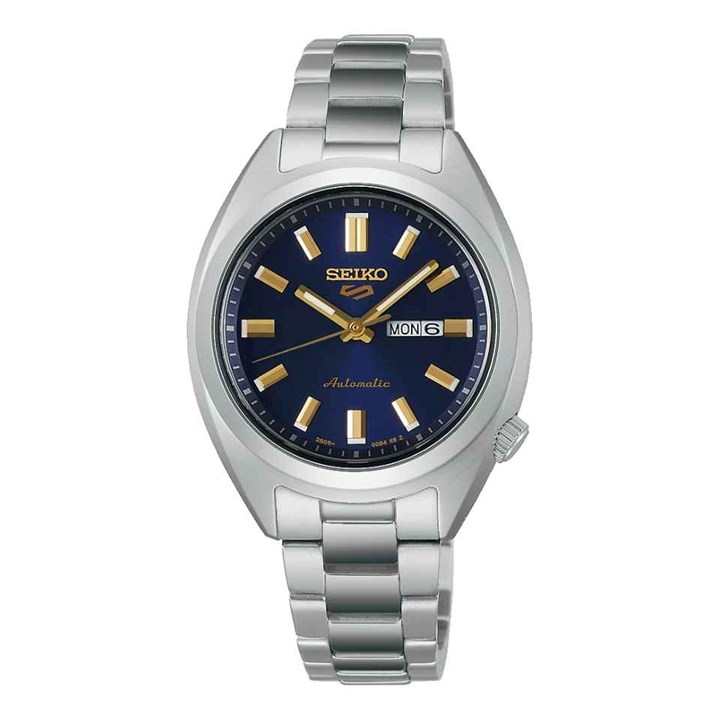
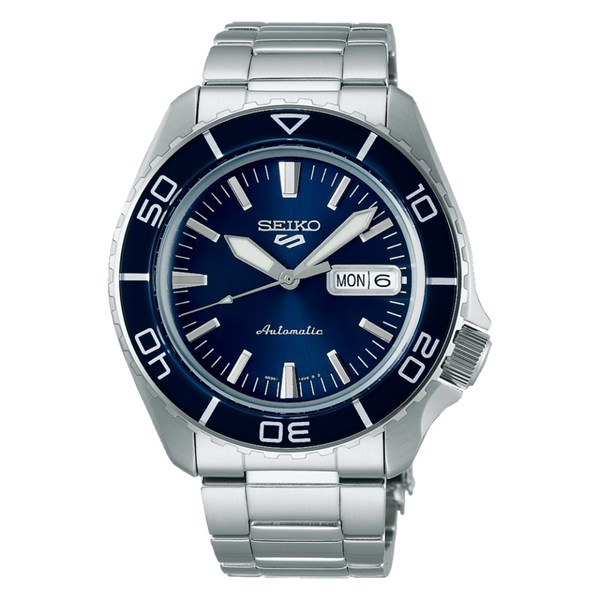
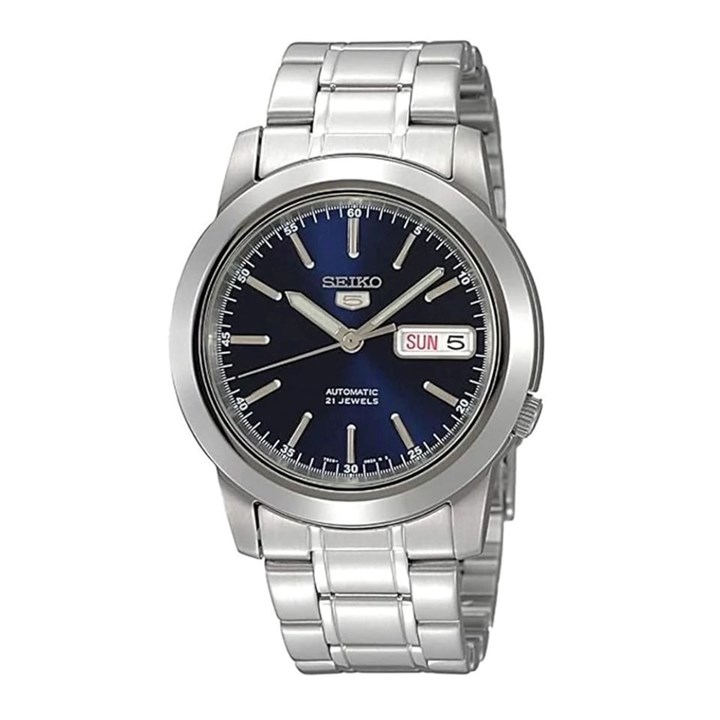
Seiko 5 SNKE51K1 Automatic Bracelet Watch - W25538
Ref. SNKE51K1
See more premium optionsHide
Stepping up in the same colour and case shape

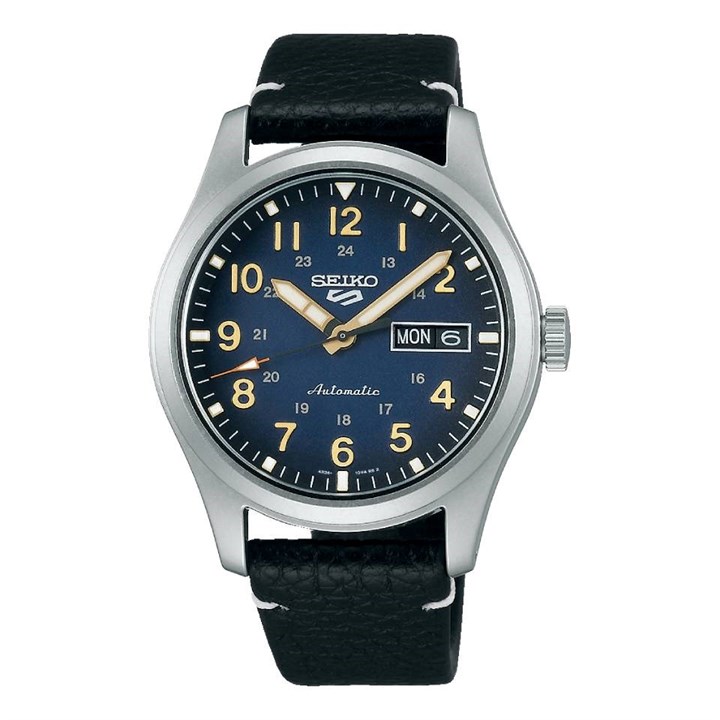
The Seiko 5 line has spent decades doing one thing: putting a self-winding movement in a steel case at a size that fits most wrists and gets out of the way. This example earns its informal "Explorer" nickname through a sunburst blue dial with applied baton indices and a day-date window framed cleanly at three o'clock — the sort of dressy-but-not-precious face that sits as comfortably under a jacket as on a weekend. The crown tucked to four o'clock is a long-standing Seiko 5 trait, keeping it clear of the hand and giving the case a cleaner silhouette from above. At 38mm across and 44mm lug to lug, it sits short on the wrist — useful on slimmer wrists, and it disappears under a cuff in a way larger sports watches cannot manage. The 7S26 inside neither hacks nor hand-winds, which is worth knowing before you buy, but it is a movement with a track record measured in decades rather than product cycles, and the exhibition caseback gives you a direct view of it running. LumiBrite on both hands and indices holds a long, bright charge — the kind of legibility in the dark that costs considerably more elsewhere.
- Reference
- SNKE51K1
- Brand
- Seiko
- Case size
- 38mm
- Case thickness
- 11mm
- Lug width
- 20mm
- Case material
- Stainless steel
- Case shape
- Round
- Dial
- Blue
- Crystal
- Hardlex
- Movement
- Automatic
- Calibre
- 7S26
- Functions
- Day-date
- Water resistance
- 30m
- Bracelet / strap
- Stainless steel bracelet
- Strap colour
- Silver
- Clasp
- Three-fold clasp
- Lume
- LumiBrite
- Retailer
- F.Hinds
Additional specifications
- Lug-to-lug
- 44mm
- Power reserve
- 40 hours
Learn more about Seiko
Kintaro Hattori opened a watch and clock shop in Tokyo in 1881, aged twenty-one, and began manufacturing under the name Seikosha — roughly, house of exquisite workmanship — in 1892. The Seiko name appeared on watches from 1924.
The company's significance is that it broke the Swiss monopoly twice. First on precision: Seiko was appointed official timekeeper of the 1964 Tokyo Olympics and built the quartz chronometers and printing timers to do it, and in the 1960s its movements placed highly at the Neuchâtel and Geneva observatory trials against the best Swiss houses.
Then on technology. On Christmas Day 1969 Seiko released the Astron, the world's first quartz wristwatch, accurate to five seconds a month where mechanical watches managed that per day. The consequences for Switzerland were catastrophic — employment in the Swiss industry fell by roughly two-thirds over the following decade. Seiko deliberately did not enforce its quartz patents, allowing the technology to spread.
The same year it produced the 6139, among the first automatic chronographs, and it has since introduced Kinetic, Spring Drive — a hybrid regulating a mechanical mainspring electronically, giving a perfectly gliding seconds hand — and its own dive and field lines.
Seiko remains fully vertically integrated, making its own hairsprings, quartz crystals, and even the Zaratsu-polished cases, at price points from under a hundred pounds upward.
- 1881
- Kintaro Hattori opens his Tokyo shop.
- 1924
- The first watches carry the Seiko name.
- 1964
- Official timekeeper of the Tokyo Olympics.
- 1969
- The Astron becomes the first quartz wristwatch.
- 1999
- Spring Drive enters production.
Also in 5 collections
This watch appears in Back in Stock (5,420), Stainless Steel Watches (3,525), Automatic Watches (1,862), Blue Dial Watches (982) and Automatic Watches Under £500 (385).
Manufacturer’s guarantee
What the specifications mean
A mechanical watch for everyday wear.
Strengths
- 38mm suits most wrists
- 44mm lug-to-lug keeps the 38mm case wearable
- Luminous hands and markers for low light
- Sits in the lower half of Seiko's range as we list it
Worth knowing
- 30m means keeping it away from water
- 40-hour reserve means winding it after a day off
Seiko 5 SNKE51K1 alternatives
Watches from other brands at a similar price, style and size, so you can see what else your budget can buy.
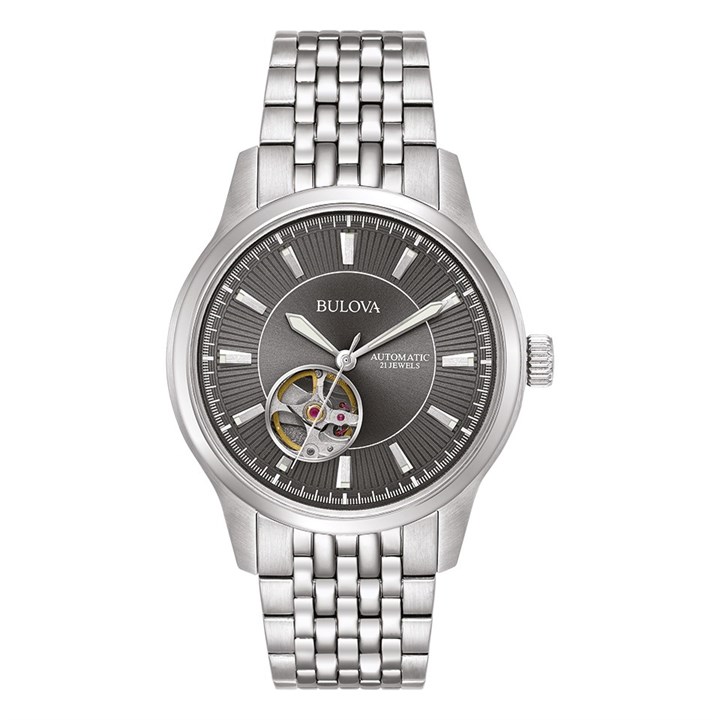
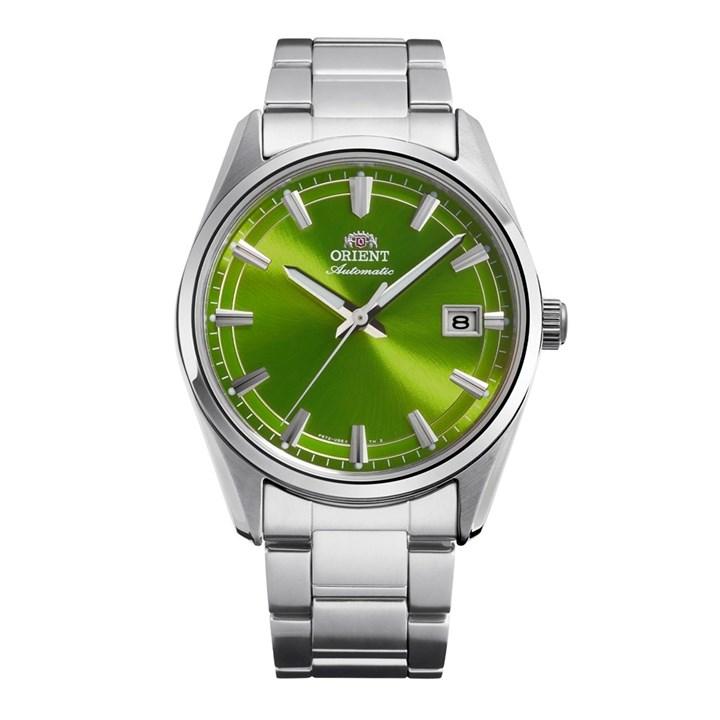
| Specification | SNKE51K1 | 96A190 | RA-AC0R05E30B |
|---|---|---|---|
| Price | £174 | £170 | £199 |
| Case size | 38mm | 40mm | 38.5mm |
| Water resistance | 30m | 30m | 50m |
| Movement | Automatic | Automatic | Automatic |
| Strap | Stainless steel bracelet | Stainless steel bracelet | Stainless steel bracelet |
| Power reserve | 40 hours | — | 40 hours |
| This watch |
|
|
Your new watch
Frequently asked questions, and things you should know about this watch
Can I swim with it?
No. At 30m it will survive rain and handwashing, but not submersion of any kind.
Water resistance explainedWill the glass scratch?
It resists most everyday knocks. Hardlex is a hardened mineral glass — tougher than standard mineral, softer than sapphire.
Sapphire, mineral and acrylic comparedDoes it need a battery?
No. It is automatic — the motion of your wrist winds it, and there is no cell to replace.
Quartz, automatic and solar comparedHow long does it run for when it's not worn?
About 40 hours fully wound — enough to survive a night off the wrist, but not a full weekend.
What size strap does it take?
20mm. Any strap of that width will fit, and on most modern watches quick-release bars make the swap a two-minute job with no tools.
Will it fit my wrist?
Lug-to-lug is 44mm, which suits wrists from roughly 15cm (6 inches) upward.
Lug-to-lug decides fit more than case diameter does.
How to size a watch to your wristIs it a men's or women's watch?
Listed as men's, though at 38mm it sits in the range that suits anyone.
Cheapest place to buy
F.Hinds is the only UK retailer we track stocking this reference, so there is nothing to compare it against today.
More Seiko watches like the 5 SNKE51K1
In stock, and close on style and price